
Software ate the front office. Agents eat the middle office.
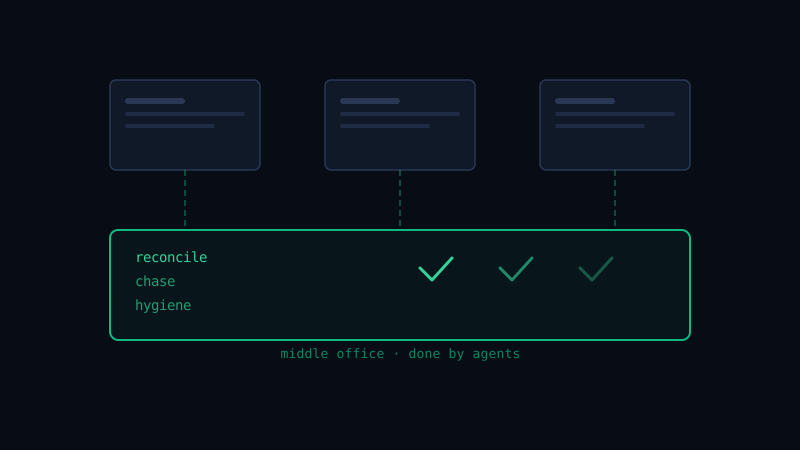
Twenty years of SaaS gave every department a beautiful screen. Sales got the CRM. Marketing got the automation platform. Finance got the ERP, support got the helpdesk, engineering got the tracker. The front office — the place where work is recorded — is thoroughly eaten.
But recording isn't doing. Between every pair of screens sits the middle office: the reconciliation, the chasing, the hygiene. Someone compares the pipeline to the forecast and fixes the drift. Someone notices the renewal date passed without a signature. Someone triages the queue, updates the board, files the report. This work lives in no single tool, so no tool ever ate it. It lives in tabs, inboxes, and Friday afternoons.
Why SaaS couldn't reach it
The middle office is cross-tool by nature. Closing the loop on a stale deal means reading the CRM, the email thread, and the call notes, then writing back to all three. Traditional software does one screen well and integrations badly; the work that spans screens stayed human by default.
Agents invert this. They read across tools the way a good ops hire does — open the record, check the thread, verify the claim — and they write back to each system in its own language. The capability that matters isn't generating text. It's finishing loops: noticing the mismatch, fixing it in place, and logging what changed and why.
What gets eaten first
Follow the apology. Every company has queues it apologizes for: the un-triaged backlog, the stale forecast, the help center from 2023, the renewals tracked in someone's head. Each apology marks middle-office work that no screen ever owned. That's the menu.
The companies that move first won't announce an AI transformation. They'll just stop apologizing for the queue — and their competitors will wonder when the headcount tripled. It didn't. The middle office just got staffed.
Ready to put AI agents to work? Get started with Hivemeld