
AI Lead Scoring Explained: How Modern CRMs Rank Your Pipeline
Not all leads are equal. The challenge is knowing which ones deserve your attention right now — and which ones need more nurturing before they're ready for a serious conversation.
Traditional lead scoring tried to solve this with rules. AI lead scoring actually solves it.
The Problem with Rule-Based Scoring
Classic lead scoring assigns points based on static criteria:
- Title is VP or above: +10 points
- Company has 100+ employees: +15 points
- Downloaded a whitepaper: +5 points
- Visited pricing page: +20 points
These rules seem logical. But they have fundamental flaws:
They're static. A CMO who downloaded a whitepaper 6 months ago and hasn't engaged since gets the same score as one who replied to your email yesterday.
They ignore context. A "Pricing Page" visit means something different if it's a cold visitor vs. someone you've been in active conversation with for three weeks.
They don't learn. Rule-based scoring doesn't update based on what actually closes deals at your company. The rules are written once and forgotten.
They're gameable. Savvy prospects know that downloading content gets them added to sequences. Their surface behavior doesn't reflect intent.
How AI Lead Scoring Works
AI lead scoring uses machine learning models trained on your historical deal data to predict which leads are most likely to convert — and when.
The inputs go far beyond demographics:
Engagement signals:
- Email open rates and reply rates
- Time-to-reply (faster replies indicate higher intent)
- Calendar acceptance rates
- Click-through patterns in sent emails
Behavioral signals:
- Email sentiment analysis ("we're actively evaluating" vs. "just browsing")
- Question types being asked (technical questions = further in evaluation)
- Number of stakeholders involved (more stakeholders = more serious)
- Urgency language detection ("we need this by Q2")
Contextual signals:
- Time since last meaningful engagement
- Deal stage velocity (how fast is this moving vs. similar deals?)
- Competitive mentions (are they evaluating alternatives?)
- Meeting recency and frequency
Firmographic fit:
- Industry match to your ICP
- Company growth trajectory
- Tech stack compatibility
- Recent funding events
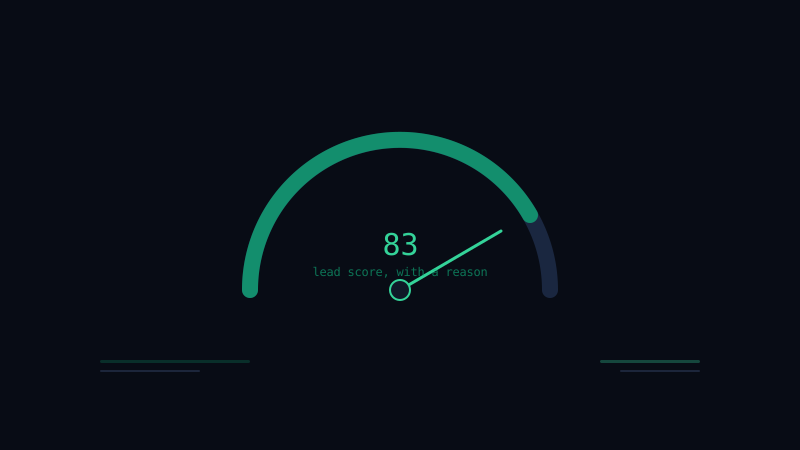
The model combines these signals and outputs a score from 0-100 — but more importantly, it outputs a reason: "This deal is scored 87 because reply rate increased 40% this week and the VP of Sales joined the last email thread."
Real-Time vs. Batch Scoring
Older AI scoring systems recalculate scores nightly in a batch process. This means a prospect who replied to your email at 9 AM might not see their score update until 9 AM the next day.
Modern AI lead scoring is real-time. The moment an engagement event occurs — an email reply, a calendar accept, a link click — the score updates. This matters for prioritization: reps can act on signal within minutes, not days.
What a Good Score Tells You
A lead score should communicate three things:
- Fit: Does this prospect match your ideal customer profile?
- Intent: Are they actively evaluating, or passively interested?
- Timing: Is now the right moment to engage?
A lead can have high fit but low intent (great ICP, but cold). A lead can have high intent but low fit (very engaged, but not the right size or industry). The most actionable leads have high scores across all three dimensions.
Using Scores to Structure Your Day
The operational value of lead scoring is prioritization. Instead of reviewing all 50 open deals every morning, a rep uses the score to build their daily plan:
- Score 80-100: Engage today — something has changed and this deal is hot
- Score 60-79: Follow up this week — momentum is good, keep it going
- Score 40-59: Monitor — nurture but don't push
- Score <40: Deprioritize or re-qualify — don't waste cycles here
This structure multiplies rep productivity without adding headcount.
Training Your Scoring Model
The best AI lead scoring models learn from your specific sales history — not generic industry benchmarks. This requires:
- Clean historical data: Closed-won and closed-lost deals with activity history
- Consistent tagging: Why did deals close or die? Were they lost to a competitor, budget freeze, or wrong ICP?
- Feedback loops: Reps should be able to flag when a score feels wrong, so the model corrects
Most teams see the model improve meaningfully after a few months of real usage, once it has accumulated enough positive and negative examples from your specific deal motion. How long that takes depends on your deal volume, so measure it rather than trusting a vendor's number.
The Limits of AI Lead Scoring
No model is perfect. Scores are probabilistic — a 90 doesn't mean the deal closes, and a 30 doesn't mean it won't.
The reps who use AI scoring best treat it as a conversation starter with the data, not an oracle. When a deal scores unexpectedly low, they investigate. When a deal scores high after weeks of silence, they reach out.
The score informs the judgment. The judgment closes the deal.
Ready to put AI agents to work? Get started with Hivemeld