
Your auditors will love AI agents (eventually)
Ask who approved a discount last quarter and watch what happens. Someone searches email. Someone else checks Slack. The CRM says one thing, the spreadsheet says another, and the rep who knows is on vacation. Human work leaves a trail the way a walk through a forest does — theoretically reconstructible, practically gone.
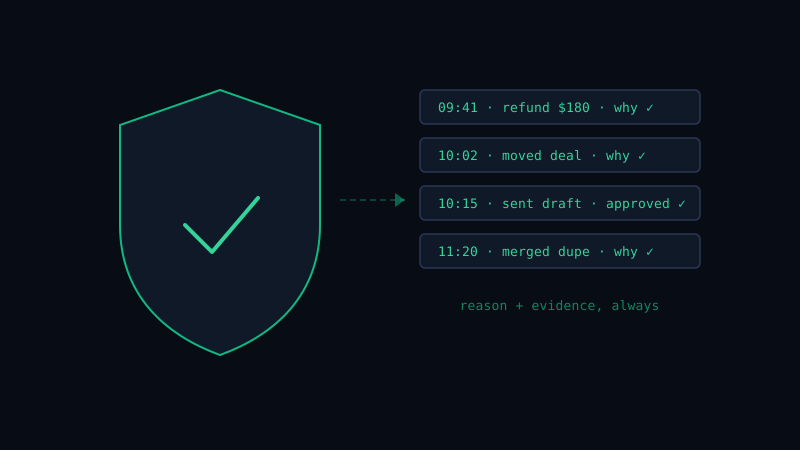
Now imagine the opposite: every action lands with its timestamp, the rule that allowed it, and the evidence it relied on. Not a summary written Friday afternoon. A record, generated at the moment of acting, that no one can forget to file. That's what an agent workforce produces by default — and it's the most auditable operation most companies will ever run.
The log is the control
Compliance people think in controls: who can do what, under which conditions, with whose approval. Traditional software implements controls as permissions and hopes the humans narrate the rest. Agents implement controls as guardrails that execute: spend over the limit stops, novel action types stop, flagged accounts stop. Each stop and each proceed is logged with the policy cited.
The audit conversation flips. Instead of "show me the approval for this," it's "show me everything this rule allowed" — a query, not an excavation. Sampling becomes census. The quarter-end scramble becomes a report.
What has to be true
Two conditions. First, the log must be complete and tamper-evident: every action, no exceptions, no edit button. If agents can act off-record, the audit story collapses. Second, policies must be readable by the people accountable for them. A guardrail nobody can explain is a liability wearing automation's clothes.
Get those right and the pitch writes itself: we know exactly what every agent did, why it was allowed, and who approved the exceptions — for the quarter, the year, or any Tuesday you care to name. Try that with a shared inbox.
Ready to put AI agents to work? Get started with Hivemeld