
Your CRM Should Tell You What to Do Next
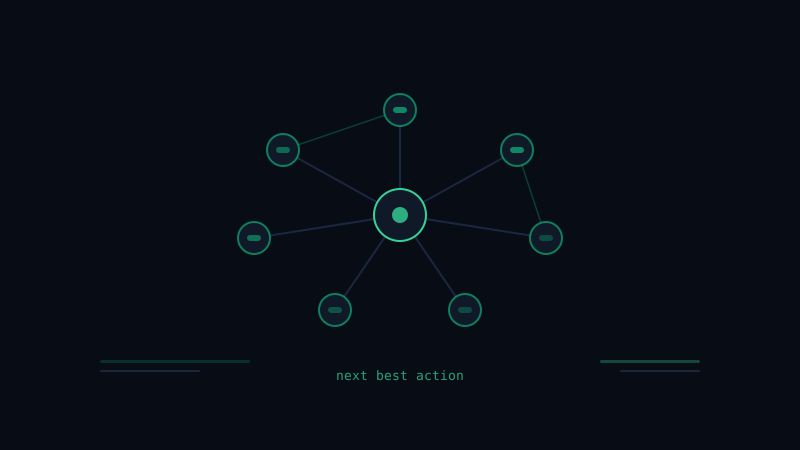
Open your CRM at 8am and ask it the only question that matters. What should I do next? It has no answer. It has fields.
The filing cabinet you feed
CRMs were built as systems of record, and record-keeping is a one-way relationship. You feed the system. It stores what you fed it. Managers pull reports from it. The rep who did the feeding gets almost nothing back.
This design made sense when the point was auditability. The company needed a durable memory of accounts and deals that survived rep turnover, and the CRM delivered that. But somewhere along the way we normalized a strange bargain. Reps spend hours a week doing data entry for a system that never once tells them anything they didn't already know.
A filing cabinet doesn't tap you on the shoulder. It waits to be queried. And a tool that waits to be queried only helps people who already know which question to ask, which is precisely the knowledge a busy rep is missing at 8am with forty open deals.
The data is already there
Here's the part that should bother you. Most CRMs already contain enough signal to know which deals need attention today. The last-touch timestamps are there. The stage history is there. The email threads show which stakeholders went quiet and which ones just showed up. The close dates that have slipped twice are sitting in plain view.
A sharp sales manager reading one rep's pipeline for an hour could produce a ranked to-do list from that data alone. Re-engage this champion, she's gone quiet since the pricing email. Multithread this account, you're single-threaded into a reorg. Push this close date or defend it, because the buyer's actions don't match it.
No manager has an hour per rep per day. So the signal sits in the database, unread, while reps prioritize by gut and by whoever emailed them last. The bottleneck was never data collection. It's attention. And attention is exactly what AI is cheap at.
What "next best action" actually means
The phrase gets abused, so let's be concrete. Next best action is not a score, a dashboard tile, or a health color. It's a specific, prioritized instruction with the reasoning attached:
- "No reply from Meridian in 11 days, and your champion stopped opening threads after the security review. Loop in their engineer contact, who's still engaged."
- "This deal's close date is Friday but there's no contract thread in the account. Confirm signature logistics today or move the date."
- "A new VP joined three threads at Northwind this week. Nobody from your side has acknowledged her. Send the intro."
Each one names the deal, the evidence, and the move. A rep can act on it in minutes or dismiss it with a reason. That's the bar. Not insight. Instruction.
The dismissals matter as much as the actions, by the way. When a rep rejects a suggestion because "that account is on hold until Q4," the system just learned something no field captured. Advice that gets corrected gets better. Advice on a dashboard just sits there being wrong.
Three ways the advice has to arrive
One interface can't carry this, because the moments are different. Hivemeld's answer combines three modes.
Watchers run always-on. Deals go quiet, stakeholders vanish, close dates drift, and a watcher catches it the day it happens rather than at the Friday pipeline review. You don't ask. You get told.
Agents run on demand. When you're prepping a call or untangling a stuck deal, you ask for the work. Summarize this account. Draft the follow-up. Build the battlecard. The advisor moves at your request, with the full deal context already loaded.
Propose-and-approve closes the loop. Instead of nagging you to update fields, the system reads what happened and proposes the update or the next step itself. You approve, edit, or reject. The judgment stays yours. The clerical work doesn't.
Any one of these alone is a feature. Together they invert the relationship. The CRM stops being a form you fill out and starts being a colleague that reads everything, forgets nothing, and speaks up at the right moment.
Why dashboards were never going to get us here
The industry's previous answer was analytics. Better charts, better filters, better pipeline views. Useful, but dashboards have the same flaw as the filing cabinet. They answer questions you thought to ask. The deals that kill your quarter are the ones you didn't think to look at, and no dashboard volunteers them.
There's also a persona problem. Dashboards serve managers running inspection. Next best action serves the rep doing the work. That distinction decides whether the system gets adopted or merely tolerated. Reps ignore tools built to check on them and embrace tools that hand them their morning. When the system tells the rep directly, the manager's job shifts from interrogation to coaching, which is what pipeline reviews were supposed to be anyway.
The advisor era
The direction is hard to argue with. Software that holds your entire deal history, reads every thread, and stays silent is wasting its seat. The next generation of CRM earns its place by being useful before you ask.
That's the system Hivemeld is building. Hivemeld CRM maintains itself from your email, agents watch every deal while you sell and act on what they find, and each rep opens a short list every morning that answers the 8am question. Not more data. A next move, with the reasoning to trust it.
Ready to put AI agents to work? Get started with Hivemeld