
Meet the Revenue Agents: What Ships with Sales, RevOps, and CS
Every rep knows what good preparation looks like. Research the account, pressure-test the deal against a framework, study why similar deals were won or lost. Almost nobody does it consistently, because each one is an hour of work and the calendar says otherwise.
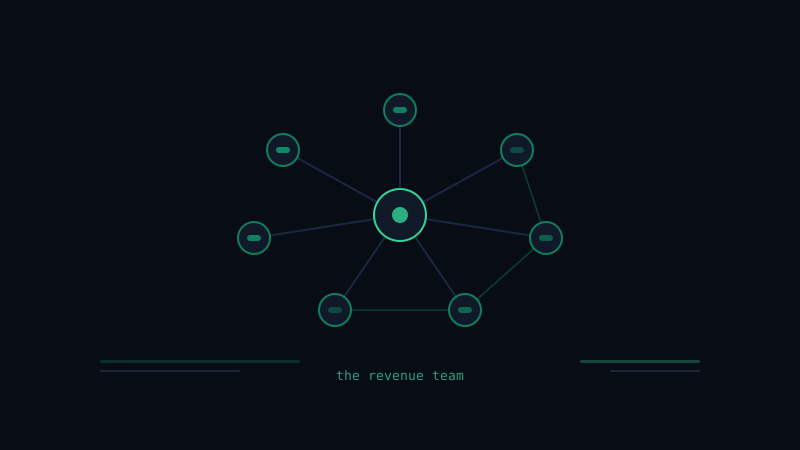
Hivemeld ships twenty-eight agents that do that work over your live CRM data. They aren't a menu of features to browse. They're grouped the way a company is grouped — by the department that owns the outcome — because that's how you buy them and that's how they're meant to run.
Grounded in your data, not the internet's
The difference between an agent and a chatbot is what it reads before it writes. A general-purpose assistant knows the world but nothing about your deal. Ask it for negotiation advice and you get a plausible essay that could apply to anyone.
These agents start from your live CRM. And because Hivemeld CRM builds that record from Gmail and Outlook automatically, the data underneath is the real history. Every email thread, every meeting, every stage change, every contact who went quiet. When the MEDDIC coach says your economic buyer hasn't appeared in any conversation, that's not a hypothetical. It's an observation about your deal, and it's checkable.
That grounding is the whole product. An agent that reasons over what actually happened produces work you can act on. An agent that reasons over vibes produces homework you still have to verify.
The Sales team
Sixteen of the twenty-eight sit with Sales, which is where most of the hour-long preparation jobs live.
Before the first call. Pre-discovery research builds a brief on a prospect before you ever talk to them. Buyer-persona builder synthesizes the roles you're selling into, so a new rep sounds like a fifth-year rep on the personas that matter. Look-alike targeting starts from your best customers and finds the companies in your data that resemble them, which is a better prospecting list than any firmographic filter. Cadence designer lays out the sequence. The buying-committee map and the org chart work out who actually decides.
Mid-deal, where preparation quietly decides outcomes. The MEDDIC coach runs your deal through the framework and tells you, with citations from your own threads, which letters are solid and which are wishful thinking. The competitive battlecard builds a one-pager for the rival actually in your deal. The objection handler preps you for the pushback this specific buyer is likely to raise, based on the concerns already surfacing in the conversation. The business-case builder drafts the internal justification your champion needs to carry upstairs — the document deals stall without and reps almost never write.
The collateral nobody has time for. One-pagers, customer success stories, deck outlines, RFP responses, and regulatory answers, drafted from what your own accounts have actually asked for.
Run the deal coach before a pipeline review and you walk in knowing your gaps before your manager finds them. That alone changes the tone of the meeting.
The RevOps team
Six agents work the pipeline itself rather than any single deal.
Forecast review examines the committed number and flags the deals that don't look like their category. Win/loss patterns and win/loss root-cause mine your closed deals for the patterns no one has time to study — which stage skips correlate with losses, which competitor keeps beating you in one segment. Quota and attainment insights do the same for rep performance. RevOps insights surfaces the structural stuff, from conversion bottlenecks to the stages where deals go to age.
Then there's the data-hygiene audit, which is the one that changed most in the move to Hivemeld. It used to produce a list of broken records for a human to go fix. Now it fixes them, inside the field whitelist, and logs each change with the evidence. A report of problems is not an operations team. Doing the work is.
These used to be quarterly analysis projects, when they happened at all. Now they're something a RevOps lead runs on a Tuesday because the forecast felt off.
The Customer Success team
Five agents cover the part of revenue that starts at closed-won.
Renewal prep assembles the state of a customer ahead of a renewal conversation: the shape of your relationship, open threads, health trajectory, unresolved issues. Onboarding health checks whether a new customer is actually landing. Account review does the QBR, so the deck-building week compresses into an edit pass. Expansion scoring and the white-space finder look at what an account bought, compare it to what similar accounts eventually bought, and point at the expansion conversation you haven't started yet.
For CS and account managers, this is the difference between walking into a renewal with a narrative and walking in with a spreadsheet.
They act, inside limits you set
A word on what these agents are and aren't.
They aren't a research library you have to remember to visit. Agents work their own backlog, keep the record current, and take the actions they've been cleared for — the follow-up that's obviously due, the stage that the correspondence says has moved, the data defect that has a correct answer.
They also aren't unsupervised. Four conditions route a decision to a person instead of letting it run: spend above a limit you set, a kind of action the agent hasn't been cleared for yet, a weak read of its own evidence, and any account you've flagged as sensitive. Everything else happens and lands in the action log with what changed and why.
That split is deliberate, and it's narrower than the usual pitch. The judgment calls in selling belong to people: the first touch on a strategic logo, the negotiation, the hard conversation with a champion who has gone cold. But most of what stands between a rep and a good judgment call isn't judgment. It's the two hours of gathering and synthesizing that nobody has. That layer delegates completely.
Where this goes
Hivemeld started from one premise: the software should do the work, not create it. First that meant building the CRM from your inbox so reps stopped doing data entry. Then watchers meant the system paid attention so nobody had to babysit the pipeline. Agents are the next step in the same direction — the preparation and analysis your data has always made possible but your calendar never allowed, and now the actions that follow from it.
The agents come with the team module that owns them, running on Hivemeld CRM underneath. Pick the deal you're least prepared for and start there.
Ready to put AI agents to work? Get started with Hivemeld